


What Is Pilates? The Ultimate Guide to Benefits, Principles, and Getting Started
Discover the benefits of Pilates: core strength, flexibility, and body awareness. Learn how Pilates classes can improve movement, posture, and well-being!
Pilates is a low-impact form of exercise developed by Joseph Pilates that focuses on core strength, muscle balance, body alignment, and controlled breathing. Whether performed on a mat or a Reformer machine, Pilates improves posture, reduces back pain, increases flexibility, and builds functional tone for all fitness levels.
What is Pilates? (Origins & Philosophy)
Originally created in the 1920s by Joseph Pilates under the name "Contrology", Pilates is a mind-body exercise system designed to strengthen the human body from the inside out.
Unlike traditional workouts that emphasize high repetitions or heavy weightlifting, Pilates prioritizes movement quality, precision, and alignment. By targeting deep stabilizing muscles, particularly around the core, pelvis, and spine, Pilates helps you move with greater ease, stability, and control in everyday life.
The 6 Core Principles of Pilates
Every quality Pilates workout is built upon six foundational pillars:
Main Types of Pilates: Mat vs. Reformer & Beyond
Modern Pilates has evolved into several distinct styles depending on your goals and preferred environment:
1. Mat Pilates
How it works: Uses your own body weight on a padded mat, occasionally incorporating light props such as resistance bands, Pilates rings (Magic Circles), or small inflatable balls.
Best for: Beginners, home workouts, and developing fundamental core awareness.
2. Reformer Pilates
How it works: Performed on a specialized apparatus called a Reformer, which utilizes a sliding carriage, pulleys, and adjustable springs for variable resistance.
Best for: Adding spring-based resistance or assistance, rehabilitation, and building targeted resistance strength.
3. Contemporary & Hybrid Pilates
Wall Pilates: Uses a wall for stability or extra resistance angle.
Power / HIIT Pilates: Blends traditional Pilates control with high-intensity cardio intervals.
Yogalates: Combines the meditative stretch of yoga with the core-strengthening focus of Pilates.
Health & Fitness Benefits of Pilates
1. Relieves Back Pain & Improves Posture
By strengthening the deep abdominal wall (transverse abdominis), spinal erectors, and pelvic floor, Pilates creates a natural "corset" around the spine. Proper pelvic alignment takes pressure off the lower back, relieving chronic pain caused by prolonged sitting.
2. Deep Core Strength & Pelvic Stability
Pilates targets the deep stabilizing muscles rather than just superficial "six-pack" abs. This creates a stable base of support for everyday movements, sports performance, and injury prevention.
3. Lean Muscle Tone Without Bulk
Pilates lengthens and tones muscles through eccentric contraction (lengthening under tension), creating functional muscular endurance without placing excessive stress on joints.
4. Enhances Flexibility and Joint Mobility
Unlike static stretching, Pilates improves flexibility dynamically through full ranges of motion, keeping joint tissues hydrated and resilient.
Pilates vs. Yoga vs. Weight Training
Understanding how Pilates compares to other popular disciplines helps in selecting the right training program:
Pilates vs. Yoga: Yoga emphasizes static posture holds, spiritual focus, and flexibility. Pilates centers on active core stability, muscular control, and dynamic movement patterns.
Pilates vs. Weight Training: Weight training uses external heavy loads to induce muscle hypertrophy (size). Pilates uses body weight or springs to build deep muscle endurance, alignment, and joint stability.
Frequently Asked Questions (FAQs)
Is Pilates good for weight loss?
Pilates builds lean muscle mass which elevates resting metabolism. However, because it is low-impact, it burns fewer calories than high-intensity cardio. For fat loss, combine Pilates with a slight calorie deficit and cardiovascular conditioning.
What's the difference between Pilates classes and Pilates sessions?
Pilates classes are group sessions following a set structure, while Pilates sessions (private or semi-private) are tailored to your individual goals and pace. Both can use Mat or Reformer equipment, and beginners can start with either.
Can beginners and men do Pilates?
Absolutely. Pilates was originally invented by a man (Joseph Pilates) to rehabilitate athletes and soldiers. All exercises can be modified or progressed to challenge anyone from complete beginners to elite performance athletes.
How often should I do Pilates to see results?
Joseph Pilates famously stated: "In 10 sessions you'll feel the difference, in 20 sessions you'll see the difference, and in 30 sessions you'll have a whole new body." Practicing 2 to 4 times per week yields visible improvements in strength, mobility, and posture within 4 to 8 weeks.
Do I need special equipment to start?
No. You can start with a standard thick workout mat at home. As you progress, studio classes with Reformers, Towers, and Chairs offer deeper resistance options.
Take the First Step Toward a Stronger Body
Whether your goal is to relieve back pain, build core strength, or simply move with more confidence, starting Pilates is one of the best investments you can make in your health.
Start Your Pilates Journey Today
Experience the life-changing benefits of expert-led Pilates instruction. Our certified instructors provide personalized guidance for all fitness levels in a supportive studio environment. Book Your Session Now


Chronic pain and poor sleep often go hand in hand. Research shows that reformer Pilates can help reduce pain, improve movement confidence, and support better sleep quality, helping to break the cycle and improve everyday wellbeing.

Teaching since 2000 First studio in 2002 Opening Wimbledon in 2012 BASI Faculty role Why rehabilitation matters Success stories How Pilates has evolved
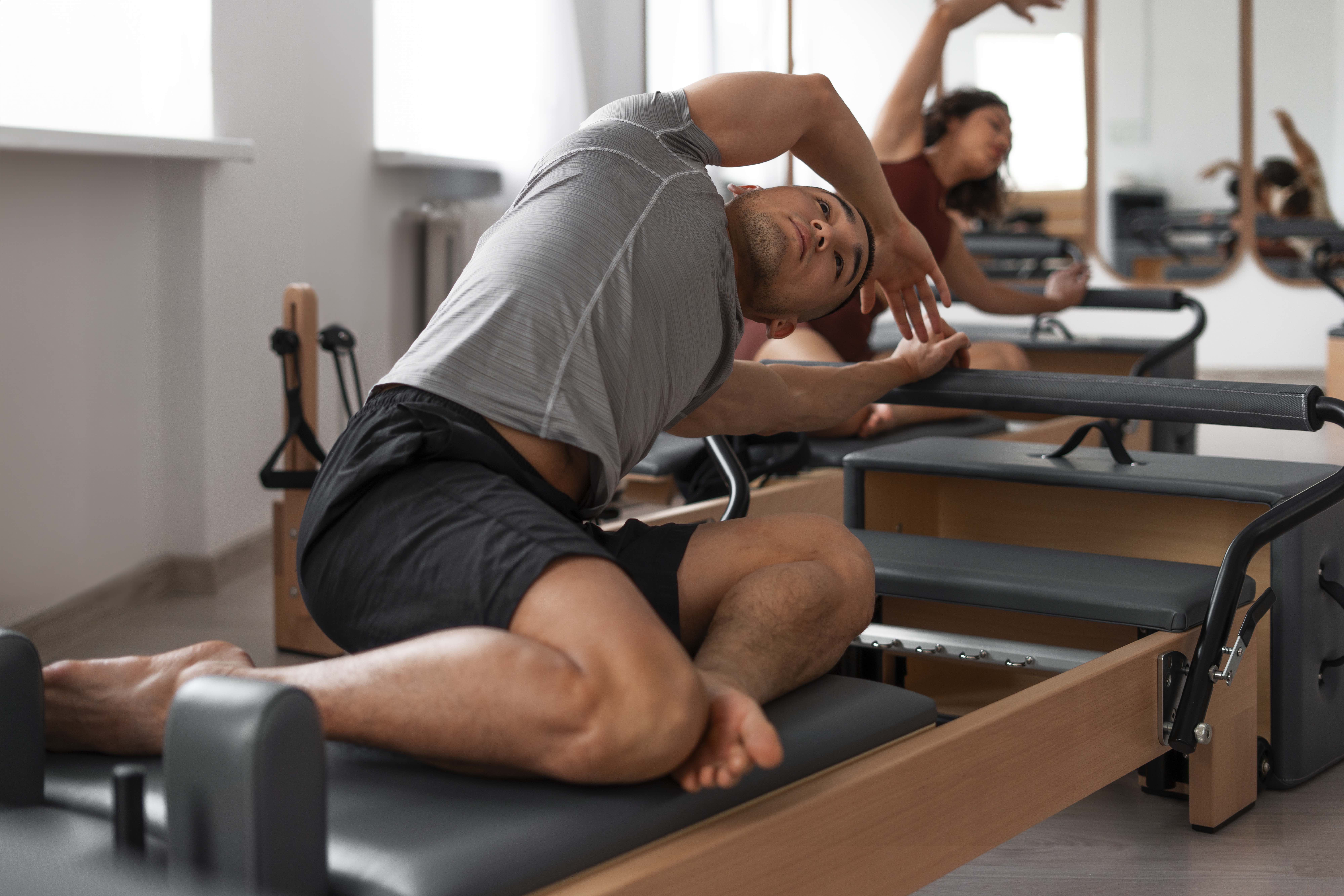
Pilates for men is rapidly shifting from niche to necessity, especially for those dealing with tight hips, back pain, or desk-related stiffness. At The Pilates Clinic in Wimbledon, reformer Pilates for men is used to improve mobility, core strength, and long-term injury resilience—backed by emerging research and real-world clinical results.


Follow us on Social media


